Transbaikalia predicts sustainable economic growth for three years

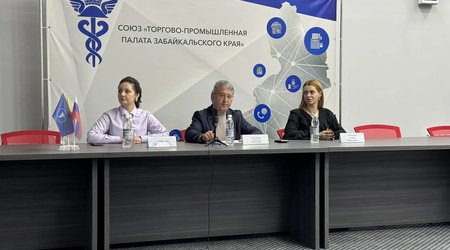
The Ministry of Planning and Development of Transbaikalia has prepared a forecast of socio-economic development for the next three years.Acting Minister Ivan Shestakov spoke about the key points of growth during public hearings on the draft regional budget at the regional Ministry of Finance.
“The region's economy will be based on several strategic sectors.Firstly, this is the mining industry, in addition, mining will remain a driver of economic growth, accounting for 26% of the gross regional product,” said Ivan Shestakov.
I.o.The minister explained that the development of large deposits has begun, such as the Udokan copper deposit, the Kultumin gold-iron-copper deposit, and the Iron Ridge deposit.Industrial production is projected to grow by 22%.
The volume of investments in fixed capital in Transbaikalia will reach about 328 billion rubles.The main investment sites will be priority development areas, where 98 residents are registered with a total investment volume of 0.9 trillion rubles.It should be noted that according to the results of the first half of this year, investment growth was 119%, the region became the third in the Far Eastern Federal District in terms of growth rates.
Ivan Shestakov spoke about social transformations in the region, which will reduce the unemployment rate from 4.9% to 4.4%.The growth of average monthly wages is projected to be 28%, the increase in real disposable income of the population by 9%.
“In Transbaikalia, it is planned to implement large-scale projects in various areas, such as the construction of new residential neighborhoods, the development of transport infrastructure, the creation of an agro-industrial park in Krasnokamensk, and the modernization of logistics routes,” added Ivan Shestakov.
It is predicted that in 2026 the gross regional product will exceed 1 trillion rubles - GRP growth will be 13% over a three-year period, inflation will drop to 4%.
Summarizing, Ivan Shestakov emphasized that the Trans-Baikal Territory demonstrates the potential for sustainable development, relying on a powerful industrial sector, an active investment policy and consistent social support for the population.
The presented forecast confirms the region’s ability not only to adapt to modern challenges, but also to develop confidently.